Calm Down, Xbox Isn’t Dead.

Photo by Ny Zoltu00e1n on Pexels.com

Phil Spencer is gone. Sarah Bond is gone. The new CEO came from Microsoft’s AI division, gaming revenue is down ten percent, hardware sales reportedly fell by nearly a third in the last quarter, and half the internet has taken that as their cue to write the obituary.

I’m not writing an obituary. I’m writing a defence.

Not because I’m a blind Xbox apologist — I’ve got enough Achievements gathering dust on my account to prove I’ve earned the right to criticise the platform when it deserves it. But because the “Xbox is dead” argument is built on a metric that Xbox itself has deliberately, strategically, and quite correctly decided to stop caring about. And until we’re honest about that, the whole conversation is a waste of everyone’s time.

The Wrong Scorecard

Here’s the thing about console sales: they’re a great measure of how many people bought a box. They are a genuinely terrible measure of how healthy a gaming business is in 2026.

Sony sold more PS5s than Microsoft sold Xbox Series consoles.

This is true.

This is also, increasingly, beside the point.

Microsoft Gaming now reaches over 500 million monthly active users. Sony’s PlayStation Network has roughly 116 million monthly active users. These are not comparable numbers. They are not even in the same conversation. And yet every time someone writes the “Xbox is losing” piece, they compare console unit sales and declare a winner — as if streaming subscribers don’t count, as if Game Pass on PC doesn’t count, as if the Xbox app on your Samsung Smart TV, your Meta Quest headset, your phone, or your Amazon Fire Stick doesn’t count.

You don’t measure Netflix’s health by how many DVD players they sold. The metric changed. The business changed. The scoreboard changed. Only the discourse hasn’t.

This isn’t to throw shade at PlayStation. The PS5 is a brilliant product and Sony makes excellent hardware and, frankly, excellent games. But PlayStation and Xbox are now selling fundamentally different things. PlayStation is selling a premium, curated hardware experience — the best version of a specific console generation. Xbox is selling access to a gaming ecosystem across every screen you already own. Comparing their console sales figures is comparing apples to oranges and then concluding that apples are winning.

In Defence of “This Is an Xbox”

I want to say something that might be slightly unfashionable right now, given that the campaign’s chief architect, Sarah Bond, has just left the building: the “This Is an Xbox” campaign was right.

Was it flawlessly executed? No. The internal reaction — reports that it “offended” Xbox hardware staff — tells you something real about the identity tension baked into that message. And yes, it became a meme – The internet did what the internet does. But the underlying idea? Completely, obviously, defensibly correct.

For too long, Xbox relied on the presumption that its target audience had a basic understanding of Xbox’s product offering — which, when you say it out loud, sounds pretty ridiculous. Game Pass is genuinely one of the best value propositions in gaming. The ability to play hundreds of games across your devices for a flat monthly fee is, by any rational measure, extraordinary. And yet the awareness just wasn’t there. The campaign was an attempt to fix that.

‘This is an Xbox’ was designed to show that almost anything with a screen was now a portal into a huge library of games available via download or cloud streaming. That isn’t marketing spin. That is a factual description of what Xbox has become in 2026. My Series S under the TV and the Xbox app on my PC are the same ecosystem. They share my saves, my achievements, my subscriptions, my friends list.

That is not nothing — that is the whole point.

The campaign didn’t fail because the idea was wrong. It failed, to the extent it did, because the execution got ahead of the infrastructure. Cloud gaming still has latency issues in some regions. Windows on handheld devices is still a rougher experience than it should be. The promise of “play anywhere” runs slightly ahead of the reality of “play anywhere, perfectly.” But that’s a delivery problem, not a strategy problem.


The New Boss, and What She Actually Said

So: Asha Sharma. Previously president of Microsoft’s CoreAI product division, she steps into the role with a background in large-scale consumer platform operations and a track record of building services that reach enormous audiences. Unsurprisingly, the gaming press and the online brains’ trust has spent two weeks nervously speculating about whether an AI executive running Xbox means Xbox becomes an AI product.

What Sharma actually said in her opening statement is worth reading carefully rather than reacting to. Her three commitments were: great games first, expanding the platform, and growing the community. On great games, she was unambiguous — “Everything begins here. We must have great games beloved by players before we do anything.” That’s not the language of someone who wants to turn Cortana into Siri.

She has also signalled a “return to Xbox” that re-anchors the brand emotionally around consoles, while still supporting PC, mobile, and cloud — a noticeable pivot from Bond’s “Xbox everywhere” approach. And here’s where I think the new leadership is threading an interesting needle: they’re not abandoning the ecosystem vision, they’re just reordering the emotional hierarchy. Console first in identity. Everywhere else in practice.

That’s not a reversal. That’s an excellent communication correction for a brand refresh.


The Engagement Economy

Here’s the business argument that I don’t think gets made clearly enough: in 2026, the most valuable thing a gaming company can have is not hardware market share. It’s time. Specifically, it’s the aggregate amount of time that hundreds of millions of people are spending inside your ecosystem, exposed to your IP, subscribed to your service, and buying your games.

Microsoft Gaming now reaches over 500 million monthly active users and is a top publisher across all platforms. That is the number Satya Nadella leads with. Not console sales. Not hardware revenue. Monthly active users — the same metric by which every streaming service, every social platform, every subscription business on earth is measured.

Why does this matter for monetisation? Because engagement scales. A player who subscribes to Game Pass on their phone might never buy an Xbox console. But they’re in the ecosystem. They’re playing the games. They might buy DLC. They will almost certainly stay subscribed. And as Microsoft’s first-party catalogue — which now spans Halo, The Elder Scrolls, Fallout, Call of Duty, Minecraft, Diablo, and World of Warcraft — continues to release major titles, the value proposition for staying subscribed only grows.

Sony’s model is elegant and it works beautifully for Sony. Sell the hardware. Drive exclusives. Capture the premium end of the market. But it is structurally limited by how many people will spend several hundred dollars on a new console. Xbox’s model is structurally limited by how many people have a screen and an internet connection. Those are not equivalent ceilings.


The Hardware Isn’t Dead Either

I want to be clear about one more thing: the next Xbox console is coming. Sarah Bond, before her departure, described the next Xbox as “a very premium and high-end curated experience,” suggesting it’ll bridge the gap between PC and console. Satya Nadella himself has suggested the console-PC divide is a false one: “It’s kind of funny that people think of the console and PC as two different things. We built the console because we wanted to build a better PC.”

The handheld space is also real and growing. The ROG Xbox Ally may have had a rougher landing than Microsoft would have liked, but the category itself — portable PC gaming with Xbox branding and Game Pass integration — is not going away. Valve proved the market exists. Microsoft intends to (try and) serve it.

Older hardware remains part of the ecosystem too, and this is underappreciated. Xbox Series S is still being sold, still being supported, and still giving players without three hundred dollars to drop on a Series X a legitimate path into Game Pass. That isn’t a sign of weakness. That’s platform thinking. Hell, even my Xbox One still gets fired up from time-to-time with plenty of older games on Game Pass still working perfectly on the older hardware.


What The Obituary Writers Are Missing

The story of Phil Spencer’s tenure is not a failure. Over 38 years at Microsoft, including 12 years leading gaming, Spencer nearly tripled the size of the business and expanded Xbox’s reach across PC, mobile, and cloud. He shepherded the Activision Blizzard acquisition — a $75 billion bet that made Microsoft the largest games publisher on earth. He oversaw the creation of Game Pass. He kept Xbox alive through a console generation where it definitively lost the hardware war and somehow came out the other side with a bigger audience than it had ever had.

That is not the biography of a dead platform or a failed executive.

Xbox isn’t dead, and if you scratch the surface just a little bit, it’s hard to even think it’s restructuring. If anything, it’s recommunicating. It has a new CEO who comes from outside the traditional gaming industry, which is either terrifying or exciting depending on your disposition. It has a content chief in Matt Booty who knows where every skeleton in every studio is buried and has the relationships to keep the creative pipeline moving.

And it has 500 million monthly active users who, whatever the obituary writers say, are still showing up.

That’s not nothing.

That’s not even close to nothing.
Is the TTRPG Boom Over, or Just Growing Up?

Photo by Stephen Hardy on Pexels.com

Back in January 2021, I wrote a post called Sorcerers and Snobbery. It was a bit of a rant — part frustrated DM, part bewildered outsider, part person who just wanted to roll some dice with people who weren’t going to make him feel like he hadn’t done the assigned reading. I called out some names. I aired some grievances. And the conclusion I landed on was roughly this: Dungeons and Dragons is a brilliant game being let down by some of the people who play and make it.

Five years on, I’m still playing. Still running games. The Feywild campaign I was so excited about in those posts morphed into something else entirely and then concluded (as campaigns tend to do when you give a group of players enough rope and enough agency to thoroughly hang your carefully-constructed homebrew world). And I’m still asking myself the same question I was asking then, just with a few more grey hairs and a slightly thicker skin:

Is this hobby getting better, or is it just getting louder?

The Boom That Wasn’t (For Everyone)

Let’s not pretend the boom didn’t happen. It absolutely did. Baldur’s Gate 3 became a cultural event. Brandon Sanderson raised over fifteen million dollars on Kickstarter for a TTRPG based on his Cosmere novels. Daggerheart — Critical Role’s own system — landed in 2025 to genuine excitement and a production value that made WotC look like they were still printing rulebooks on a dot-matrix printer.

By the numbers, the hobby is enormous. The global TTRPG market sat at over two billion dollars in 2025. Over three and a half thousand TTRPG-related projects launch on Kickstarter every year, with nearly three-quarters of them getting funded. DriveThruRPG hosts over a hundred thousand individual digital titles.

And yet.

Every time I try to introduce someone new to the hobby — genuinely new, not “I watched some Critical Role” new — I watch the same slow-motion disaster unfold. Their eyes go wide. Not with excitement. With overwhelm. Because before they’ve touched a single d20, they’ve already been told — explicitly or implicitly — that there’s a canon of content they’re supposed to have absorbed. And that’s the hobby’s real problem in 2026. It’s not that it’s too niche. It’s that it has convinced itself that it’s too sophisticated for its own front door.

The Content Curse

Here is my genuine, unhedged take: the TTRPG hobby is a worse place for a brand new player today than it was in 2019. And the reason isn’t the rules. It isn’t the price of books. It isn’t even the fragmentation of the market into a thousand indie systems each promising to be the one that finally cracks the code of collaborative storytelling.

It’s the content. Specifically, it’s the weight of the content. The sheer volume of YouTube channels, Actual Play podcasts, Reddit threads, TikTok hot takes, Substacks, and Discord servers that have grown up around the hobby over the past five years has created an ambient expectation that a new player arrives at the table having consumed at least some of it. And “at least some” is a moving target set entirely by whoever is at that table with the most hours logged.

That’s not unique to DnD — go have a look at Kickstarter’s TTRPG section this month and try to count how many projects describe themselves as taking ‘a fresh new approach to collaborative storytelling’ while simultaneously assuming you already know what a GM screen is, what PbtA means, and why the OGL controversy matters. The indie TTRPG space has its own version of this problem — a rich, creative, genuinely exciting space that has nonetheless developed its own gatekeeping dialect almost as fast as it emerged from mainstream DnD’s shadow.

None of this is a call for new players to catch up. It’s a call for existing players to get out of their own way. The best sessions I’ve ever run (and I’d wager the best sessions most people have ever played in) had almost nothing to do with rule mastery. They had everything to do with giving people permission to tell a story and then getting out of the way while they did it. Mechanics are a framework and the moment a table forgets that, you’ve lost the new player at the door, and frankly, you’ve lost something important about why any of us started doing this in the first place.

Brennan Lee Mulligan Is Not Your Problem (But He Is Your Mirror)

I want to say something nice about Brennan Lee Mulligan, because I mean it sincerely and I don’t want it to get lost in qualifications: the man is extraordinary. What he does behind the GM screen for Dimension 20 is genuinely some of the finest roleplaying craft I’ve ever watched, and his ability to hold narrative threads, honour player choices, and deliver emotionally resonant moments on camera without it ever feeling like performance is a masterclass in how to run a game.

And that is precisely why he’s irrelevant to the new player conversation.

Brennan is advanced class. He’s the PhD thesis. He’s what you aspire to after a decade of confident GMing when you’ve stopped worrying about forgetting the rules for grappling and started thinking about dramatic structure. Watching BLM and thinking “right, that’s what DnD should look like” is like watching a Michelin-starred chef julienne vegetables and concluding that you probably shouldn’t bother learning to cook.

The trouble is that Brennan — and both Critical Role and Dimension 20 by extension — has become something of a new benchmark in the Actual Play ecosystem, and benchmarks have a nasty habit of becoming expectations.

The WotC OGL Hangover

Wizards of the Coast tried to pull a fast one in 2023 with the Open Game Licence controversy, and the hobby caught them in the act. For a few glorious, furious weeks, the community did something genuinely impressive: it organised, it pushed back, and it won. Paizo doubled down on OGL-free licensing with ORC. Third-party publishers scattered to the winds and explored new systems. For a moment, it felt like the industry was going to meaningfully restructure.

And then, largely, it didn’t.

WotC released updated core books with a 62% player approval rate in beta testing — which, if you’re being uncharitable about it, means that nearly four in ten players who tested your flagship product didn’t love it. Pathfinder 2e usage on virtual tabletops bumped up 15% after the OGL disaster, which sounds impressive until you remember that DnD 5e still accounts for over half of all games played on Roll20.

The big dragon didn’t shrink. It just got a stern talking-to and went back to its hoard.

The BG3 goodwill, meanwhile, has all but evaporated for everyone except the genuinely devoted. That game was a cultural supernova (and I say that as someone who played it obsessively) but supernovas don’t sustain ecosystems. They illuminate them briefly and then leave. WotC benefited enormously from Larian’s work without doing anything to particularly deserve that benefit, and they’ve spent the eighteen months since largely squandering the attention it generated.

If I’m being fair, WotC is in a genuinely difficult position. The OGL mess poisoned their relationship with exactly the third-party creators whose content had built much of 5e’s ecosystem, and now those same creators are the ones driving energy behind the likes of Daggerheart and Draw Steel. The very people who built the cathedral have started building their own chapels. And whether WotC can win them back — or whether they need to — is the most interesting structural question in the hobby right now.

My Table, My Kids, My (Ongoing) Chaos

Through all of this industry noise, I’ve managed something I wasn’t sure I’d ever pull off: I have a reasonably consistent group, and I have introduced my kids to the game.

But here’s the thing — and this is the part I come back to when I think about the new player problem — when my kids sit down to play, they don’t care about any of it. They don’t know what Daggerheart is. They haven’t watched Critical Role. They’re not worried about whether they’re playing 5e correctly or whether their character concept is mechanically optimised. They just want to know what happens next. They want to make a choice and see it matter.

That is the game. That has always been the game. Everything else — the books, the discourse, the Kickstarters, the hot takes on system design — is just scaffolding around that one simple, irreducible thing.

So: Boom or Bust?

The boom isn’t over. The numbers are too big, the creative output too significant, and the genuine joy too real for that to be true. But it has matured in ways that aren’t always flattering. The community is larger, louder, and more factionalized than it was in 2019. Like most poles of the internet, the gatekeeping hasn’t disappeared, it’s just wearing different clothes and arguing about different things. The indie renaissance is real and exciting but has brought with it its own brand of “you haven’t heard of this system?” snobbishness that would be funny if it weren’t so familiar.

What gives me hope is what’s actually happening at tables — not on Twitch streams, not in Discord servers, not in the comments of hot-take YouTube videos, but in living rooms and kitchens where somebody sat down with a set of dice and a story they wanted to tell.

My campaign may have wandered somewhere entirely unintended. My kids still argue about who gets to be the princess. The game is fine. It’s the industry around it that needs to look in the mirror.

And maybe that’s always been true.

Road Hog

Today’s achievement quest took me on a destructive detour through the vibrant world of LEGO 2K Drive. The goal? Earn the “Road Hog” achievement by obliterating 200 unsuspecting traffic vehicles. It might sound a bit chaotic (and it was!), but sometimes a bit of mindless mayhem is just what the doctor ordered.

Embrace Your Inner Brick-Built Brute

Let’s be honest, who hasn’t wanted to go on a rampage in a LEGO world without any real consequences? LEGO 2K Drive grants that wish, letting you turn everyday commutes into demolition derbies. Earning “Road Hog” is less about racing prowess and more about embracing your inner brick-built brute.

My strategy? Pure, unadulterated aggression. I hopped into my trusty sports car, cranked up the speed, and set off on a vehicular vendetta against the innocent minifigure motorists of Big Butte County. Each satisfying crunch and explosion brought me closer to my goal, turning the colorful streets into a whirlwind of LEGO debris.

Grindy, but Gloriously Goofy Fun

I won’t sugarcoat it – reaching 200 vehicular vanquishes took some time. There were moments of repetition, but the sheer absurdity of it all kept me entertained. Punting bewildered pedestrians out of the way, pulling off insane aerial stunts, and discovering hidden corners of the map made the grind a lot more enjoyable.

The “Road Hog” achievement might not be the most challenging or prestigious, but it’s a testament to the goofy fun that LEGO 2K Drive has to offer. Sometimes, it’s not about the destination, but the gleeful destruction you cause along the way.

Tips for Aspiring Road Hogs

If you’re looking to add this achievement to your collection, here are a few tips:

  • Focus on traffic-heavy areas: Big cities and busy highways are your best bet for finding a steady stream of victims.
  • Don’t be afraid to get creative: Use ramps, power-ups, and the environment to your advantage. The more spectacular the crashes, the better.
  • Have fun with it! LEGO 2K Drive is all about embracing the silly side of things. Let loose, cause some chaos, and enjoy the ride!

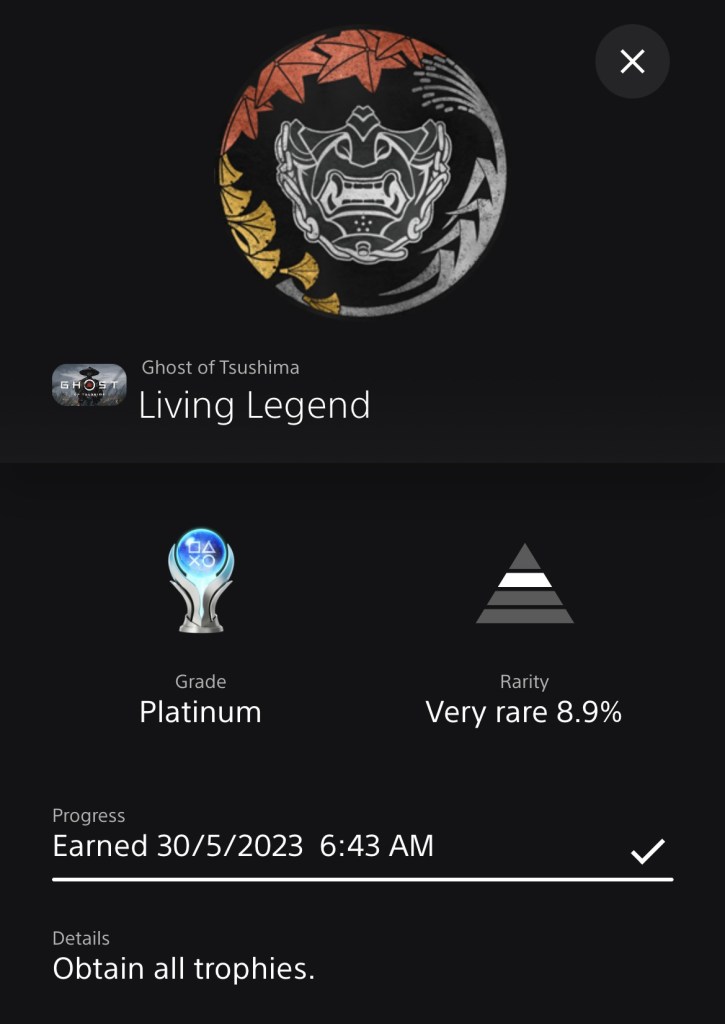
Tsushima Hand Roll

Living Legend Platinum Trophy

For my many years lamenting PlayStation’s late-to-the-party ability to change names, one thing that replaying some of my previously-earned Platinum games has afforded me is the ability to relive some truly great classics. God of War, Spider-Man, and now Ghost of Tsushima have all earned their rightful place among games re-played from start-to-finish, and in some instances, the not-so-insignificant honour of a second platinum.

This latter addition to the replay catalogue was once again a reminder how utterly brilliant Sucker Punch are at delivering a rich feudal tale that is accessible to the general masses. I would have been lucky to differentiate my Samurai from my Ronin before playing Tsushima, and even the delicate balance between Lords and the Emperor was never covered in my Year 9 History classes.

But the education aside, this is just a bloody good story, told with beautiful visuals, an amazingly-paced progression system. For a trophy hunter, the ability to go back and clean-up everything after the main story is an absolute must as well – with the guiding wind mechanic a brilliantly-implemented little system to not necessarily hold your hand for the whole journey, but certainly give you a little tap-on-the-bum in the right direction.

If you’ve played Ghost of Tsushima before, you’ll know how good it is. If you haven’t – then do yourself a favour and get this off the PlayStation library now. It’s not just a good game. It’s a great game.

As the Japanese proverb goes – “There are hardships and there are delights.”

Ghost of Tsushima is an absolute delight.

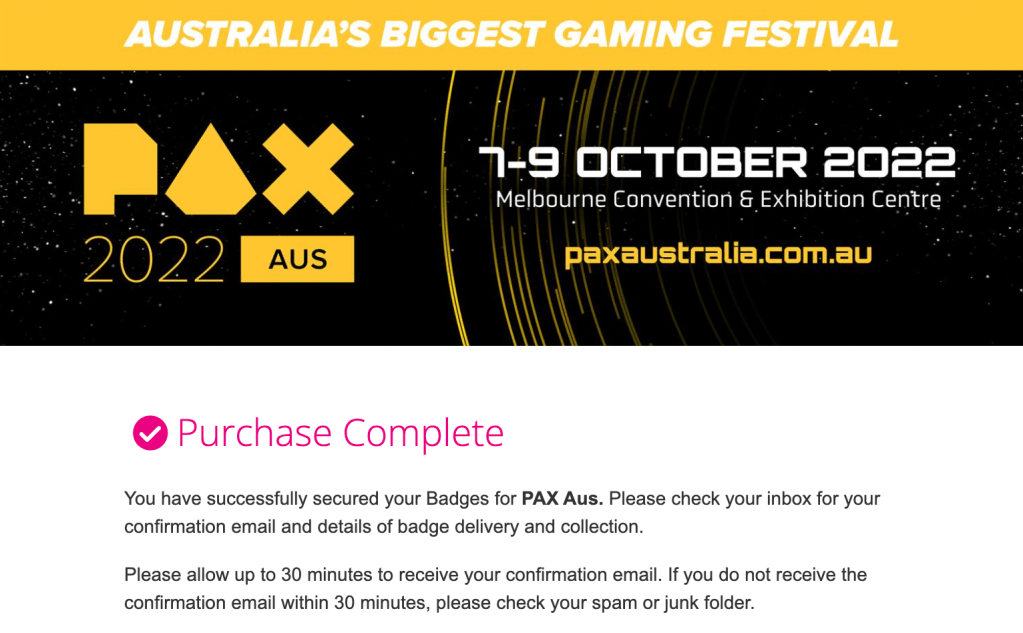
PAX 2022 is Back on the Menu, Boys!

Going back to PAX!

I don’t quite think people appreciate how much I bloody love PAX. It started off as just something that I wanted to go to because it was a big international gaming convention that had made its way down to Melbourne, and I just wanted to be a part of that little slice of history. I got myself a day pass, and wandered around the Melbourne Showgrounds with a good work mate, Tim, and we played some video game demos, looked at some stuff, brought some merch and went home. It was a much smaller, intimate affair than what PAX has become now, but it was enough to plant the seed. These were my people and this was absolutely my place in the world.

Flash forward nearly ten years, and PAX is a fixture on the Melbourne Geek and Pop Culture Scene. It now occupies the entirety of Jeff’s Shed, and Melbourne itself is overwhelmed with lovers of gaming for three days – utterly embracing the chaos and everything that it entails. And then, of course, Melbourne (in particular) has felt the pinch of COVID for the past two years. Unsurprisingly, like every other major event on the calendar for the start of the 20s, it got moved to an online format which was ‘fine’, but … well … it’s just not PAX.

But it’s back, baby. PAX. IS. BACK.

Yes, it’s filled with people who need a decent shower, and yes, it is a breeding ground for disease and I am almost certain that I’ll need (and want!) to be vaxxed in quadruple before I set foot past the threshold, but there’s something about being surrounded by the blast of loud music, the lights of games, and the atmosphere of everyone just being among kindred spirits that you do not get with any other convention, event or activity – ever.

And so too, is this a good opportunity to fire up the gaming blog and start to warm up the writing muscles as I get ready to stretch the ol’ grey matter back into the world of gaming. Of course, I’ve never stopped gaming, but I’ve just stopped writing about it.

And that, dear reader, is a shame. A damn shame.

Am I going to write every day? Absolutely not. Will I try to write more though? Sure, I guess? What I’m expecting to do is write a little more on some of my tabletop endeavours – notably Dungeons and Dragons considering much of the pandemic has seen me create a homebrew world and successfully (by my account) lead a team of adventurers on a journey that is currently just broaching the Feywild. Look for more on this to come.

But even if I don’t write another word for another few months, you better believe I won’t be shutting up about PAX when it comes.

And I can’t bloody wait.

The Definition of Insanity

Did I ever tell you what the definition of insanity is?

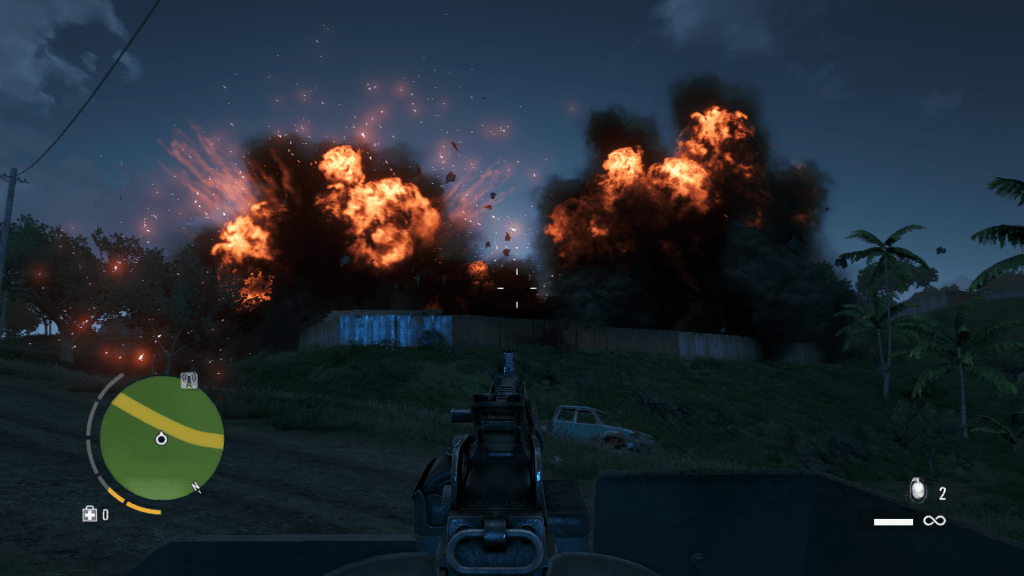
I absolutely love the FarCry series, but my love of it really started with Number 2 (the one set in Africa). The homage to Heart of Darkness tickled the literary nerd in me nicely, not to mention the level of freedom and exceptional gameplay weaved throughout.

So, it’s no surprise that I loved 3 when it came out. More tropical, more sexy. And the same serotonin farm that I loved about the second one. And now, it has a remaster! Brilliant!

I finished the main story tonight and I’ll chip away at a few more achievements over the coming days, but I have to admit that I had – and am having – far more fun with FC3 than I am with FC5. I’m not sure if it’s the story, the setting, or the clearer objectives (as in ‘less noise’ on the map), but I find myself just looking for something to do quickly and happily in FC3, whereas 5 I find myself tired of having to harvest animals and do fetch quests just to progress the story.

FC3 is smarter about this filler, putting upgrades behind that barrier rather than story progress, and the game is better for it. It caters for those who want to run through the checklist of collectables and camps and things to do, versus those who want to mainline the story.

My plea here is that I hope FC6 will be more like 3 than 5, and I hope that it adds another great title to the FarCry stable. Don’t get me wrong, I don’t hate 5, but hunting down Christian extremists in the heartland of America is far more tiring than not.

But look, Giancarlo Esposito wouldn’t put his name to a bad game, would he? Would he?

Time will tell.

Sorcerers and Snobbery

Photo by cottonbro on Pexels.com

While I’ll be the first to admit, I’ve only openly ‘loved’ Dungeons and Dragons these past few years, it is, nonetheless, a lifelong passion of mine, properly kindled during the Baldur’s Gate and Neverwinter Nights eras, and complimented with a love of the fantasy genre that has spanned The Wheel of Time and The Lord of the Rings in between.

What I don’t think, however, is that I have any sort of ownership over either DnD or the genre itself – but boy, I’ll tell you what, it is rife in the DnD community. Rife.

I’ve had a fairly tepid appreciation of Chris Perkins’ lack of humility and the dismissive attitude he has to the community for a while now, but I also love 5e that much that I’m willing to sit him quietly in my blind spot and just consume his content cf. his personality.

James Haeck annoys me for many, many reasons, not least of which is his choice to use awful language choices (in the spirit of: ‘why use a small word when a diminutive one will do’). If you’re a writer, catering to an online audience, and you have to link to a word you’ve used on Dictionary.com when challenged on it, then you’re either too proud to use an editor, you have a bad editor, or you’re just a wanker.

James Haeck of EGtW and DnDBeyond.com Fame [Source: Twitter; WOTC]

Of course, Haeck shares similar acclaim to Perkins in that he had the distinct honour of having co-authored the Explorer’s Guide to Wildemount, which has seen incredible popularity since COVID forced everyone inside and Critical Role saw a resurgence. But in contrast to Haeck’s aesthetic evolution from affable nerd to channelling Inigo Montoya represents less of a ‘glow up’ and more of ‘lean in’ to the vapid personality traits of celebrity, my appetite for reading his content goes from tolerance to actively avoid.

Not a great position to be in when Haeck pretty much wrote everything on DnDBeyond for the past few years.

Nonethless, I do want to close out this tirade with a qualification. Both Haeck and Perkins are big fish in the DnD world, and to some extent, they both – quite rightly – couldn’t care less what I think of them. Whatever I might think of their personalities, they still, ultimately put pen to paper, knuckled down, and have contributed to the game we all know and play and love.

That’s not nothing.

No, my lament today is much more of a personal nature, and it’s to do with a friend who has recently discovered DnD. In the real world, I’d be quite pleased for him. In fact, I’m happy to admit I started off quite pleased for him. This lad was someone I had directed in theatre a few years ago, and he falls into the overlap of gamer, actor and nerd much like myself – so it was only natural that he find a home in DnD. Today he made a post about how much he loved DnD and couldn’t wait until the next session – and I’m not afraid to admit – I was a little jealous. Here’s a man who can have a regular, face-to-face game with friends and enjoy everything about it, while I’m being mocked by C-grade friends and struggling to find ten minutes to teach my son the dice mechanics of the game. But they’re my problems, not his, and so I suggested that he watch some Critical Role to tide him over between games. His response? “Duh, how do you think I got into it?”

Well, no, actually, I know that’s not how you got into it. You posted that on Facebook as well, you muppet, and I know that a good friend introduced you into his game first – so revising your history for me doesn’t work. But I’m too introvert to call out that little untruth, so let’s move on. My next step was to celebrate CR with him and call out some of the early victories of Vox Machina (I’m only early into Campaign 1 myself!) but then I was curtly told: “You’re talking of Season 1. I started on Season 2.”

OK, fine, perhaps it would be quicker just to tell me to go fuck myself?

The thing is, this heightened sense of self-worth in DnD isn’t unusual. I find it on the Critical Role Discord Server (which I soon left), I find it among people in the forums and groups I visit, and I find it talking to people who get a regular face-to-face game with friends and pizza and beer.

Today while “playing” DnD with my kids, I have to admit, I got a little glimmer of joy in my heart when my wife said “I’ll play!” but as it turned out it was just a ruse to stir up my son. I appreciate the ruse, we stir him up like that all the time, but as it turned out it was just another extension of her active distaste for Dungeons and Dragons.

So, now people who play it are self-important, know-it-all, insular little types who are empowered by the likes of Haeck and Perkins in elevating their social status. (It’s a terrible analogy, but it is like watching a very bad extension of the Washington DC riots, whereby Trump inflames his base and then they take action against “someone” – in DnD this can be anyone, including others in their own playing group.)

People who don’t play it are still riding the old wave of “DnD is for Nerds”. Something to be hidden away or ashamed of. It’s almost like being more interested in geriatric pornography would be a more socially-acceptable pastime than DnD, and that’s saying something in the year 2021, when we’re all supposed to be a little more understanding and a little more tolerant – perhaps, that is, as long as we confirm to social ideals.

So, what’s the lesson here? Does DnD have a cultural problem (moreso than its recent redress of racial stereotypes)? Am I too soft-skinned? Is this a broader human failing being seen through the lends of DnD or – as I suspect – are humans just a little bit shit?

I love fantasy. I love the mechanics that DnD gives me to be able to play in that kind of fantasy world. I think, if anything, the strength of the game comes from my ability to enjoy it in spite of these flawed personalities – both big and little.

Though, I have to admit, I do wonder from time-to-time if the grass is greener over with those Pathfinder folks.

Candlekeep Mysteries

Photo by Ekrulila on Pexels.com

I bloody love Candlekeep. Make no mistake about it, Baldur’s Gate was my introduction to the Dungeons and Dragons universe and Candlekeep the first location I ever truly explored.

At the time, everything about being constrained to the BG story annoyed me – I hated being forced to being Gorion’s Ward and having a pre-existing relationship with Imoen. Later in the game I hated the whole ‘Bhaal Son’ thing. But in my older years, having matured, I can appreciate that this was but one of many stories I could enjoy in the Forgotten Realms, or DnD in general.

(All of this, of course, with the exception of Minsc and Boo. Minsc and Boo are infallible.)

One thing that never disappointed me though, was the locations. The isometric maps of Candlekeep and BG and even the wilds that surrounded the cities and places to visit were living, breathing characters on their own. I visited every shop and every store room. I fought assassins and I read books and for a map that was essentially one big circle around a castle, it was undoubtedly my DnD hometown. And now, to see Candlekeep serving as the new location for the adventure anthology, Candlekeep Mysteries – well, I can tell you this is a day one purchase for me.

One of the things that is great about the collection of stories is that WotC have recognised that there is a market for ‘small bites’ of DnD. Sure, some people might love an enduring, multi year campaign … but others have time for a one shot once every few months, and nothing more. After all, life has shown us in the past twelve months that we need some agility in how we live our lives, and so setting up a book of one shots and giving people a chance to taste DnD, rather than scaring the hell out of people who know nothing. It’s a smart move – and I like it.

I want to get a game together for later this year, and while I was planning on grabbing an Internet one shot, I reckon this mystery-style approach could be just the gateway drug we all need.

Let’s see how things go.

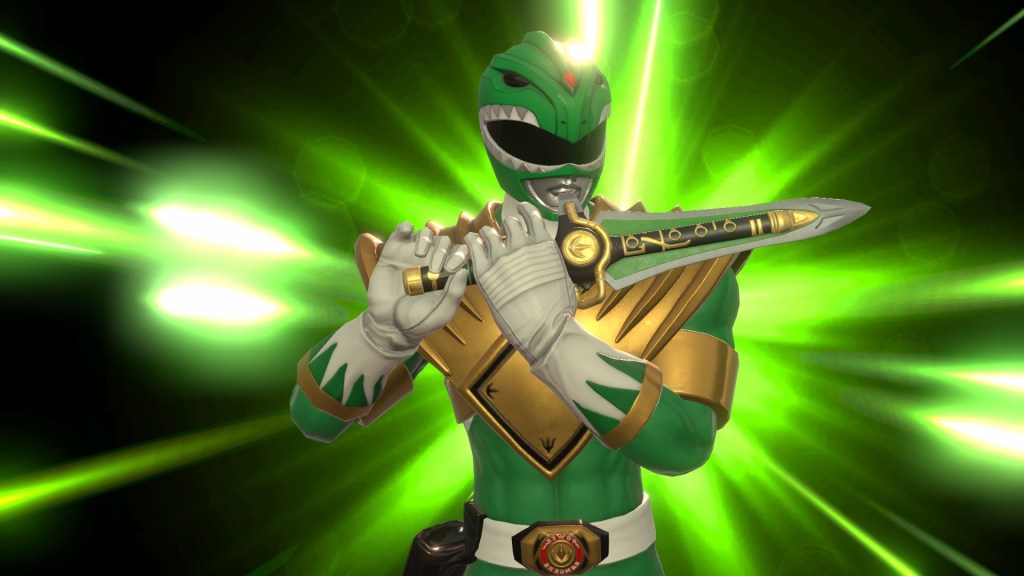
Power Rangers Battle for the Grid

Ahh, Tommy. It’s good to see you again.

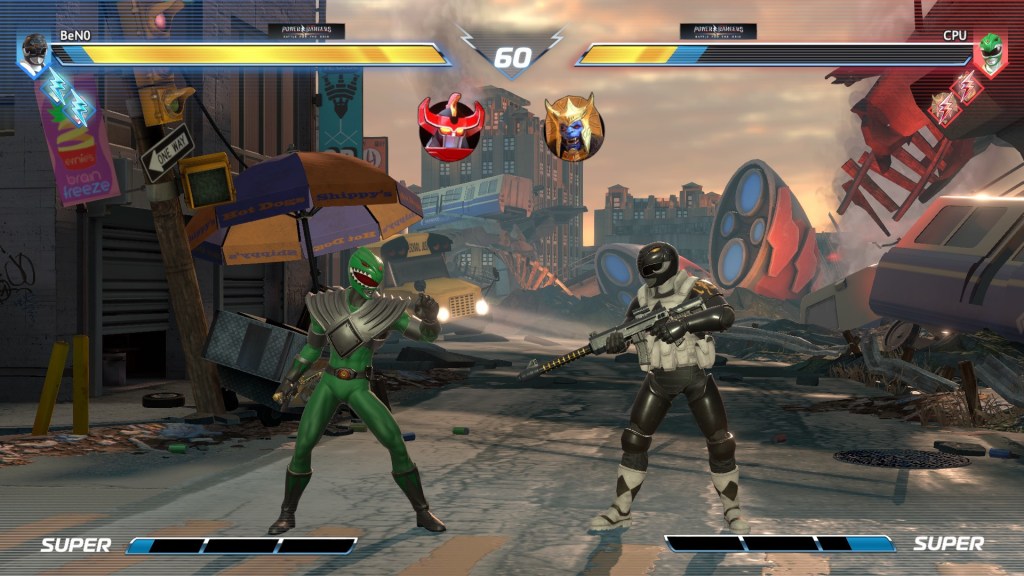
You have to admit, Xbox Game Pass is pretty good. For a game that I’d never pick up off the shelf at EB Games, for an IP that I grew up with and I love, this was a great way to quickly consume a rather mediocre game that seemed to focus on exploiting the Power Rangers IP rather than make a fully fledged game. I mean … even Injustice made a better mobile port for its games than the console version does here.

Mortal Kombat!

Make no mistake about it. This is Power Ranger Mortal Kombat, and it’s a ‘lite’ version at best. No difficulty changing, not really a lot of appetite to chase achievements and a fairly rudimentary game concept doesn’t really spark some Marie Kondo joy, so I’m happy to have had the opportunity to play it, but it’s a no from me.

Assassins of Kings

I knew about King Foltest only because he was one of the primary Gwent heroes in The Witcher 3, but I never really made the connection between ‘the card’ and ‘the character’, but it all makes perfect sense really when you think about the number of cards based on NPCs in W3 as it is, there was always bound to be a few nods to the earlier games littered throughout.

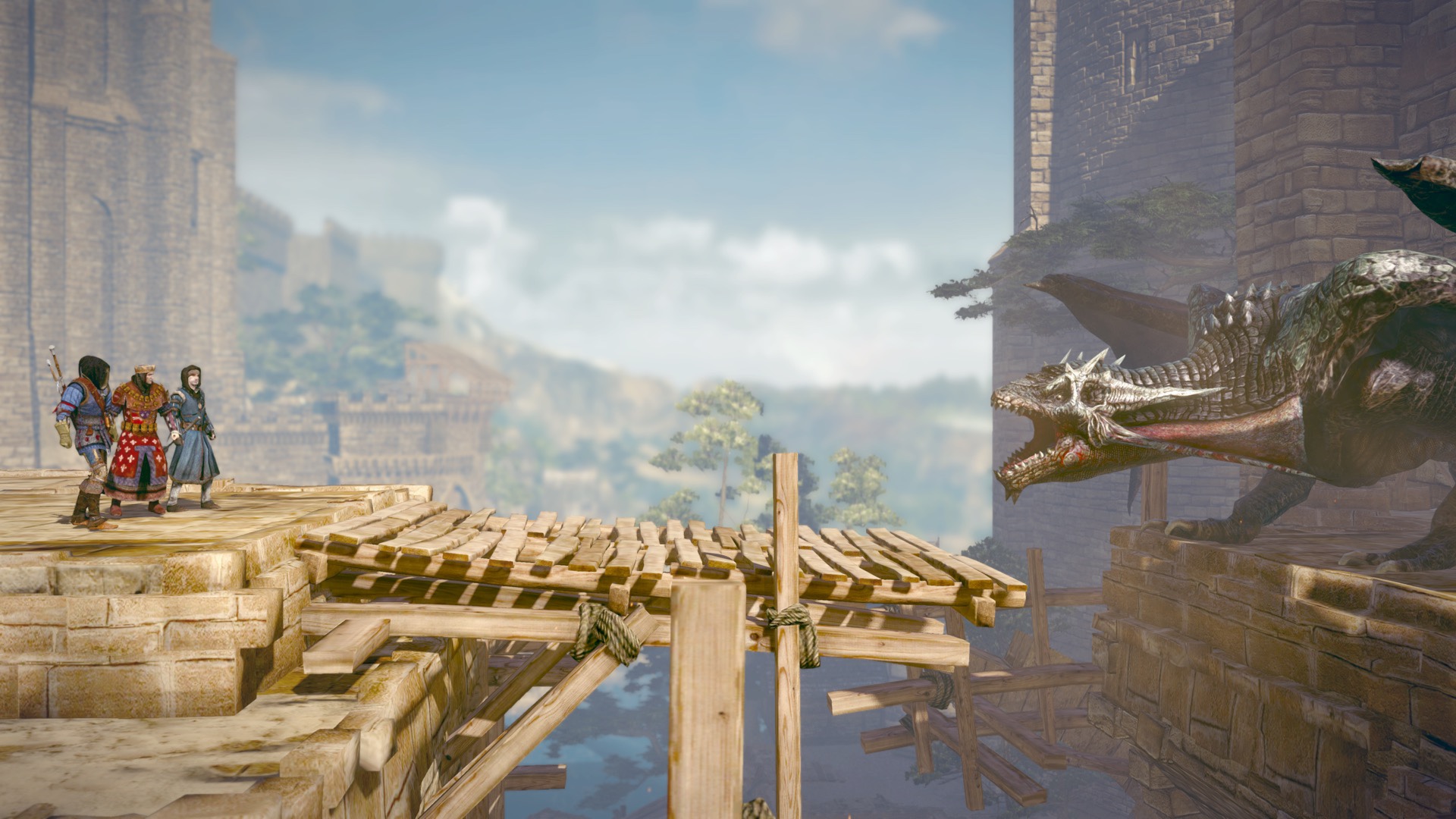
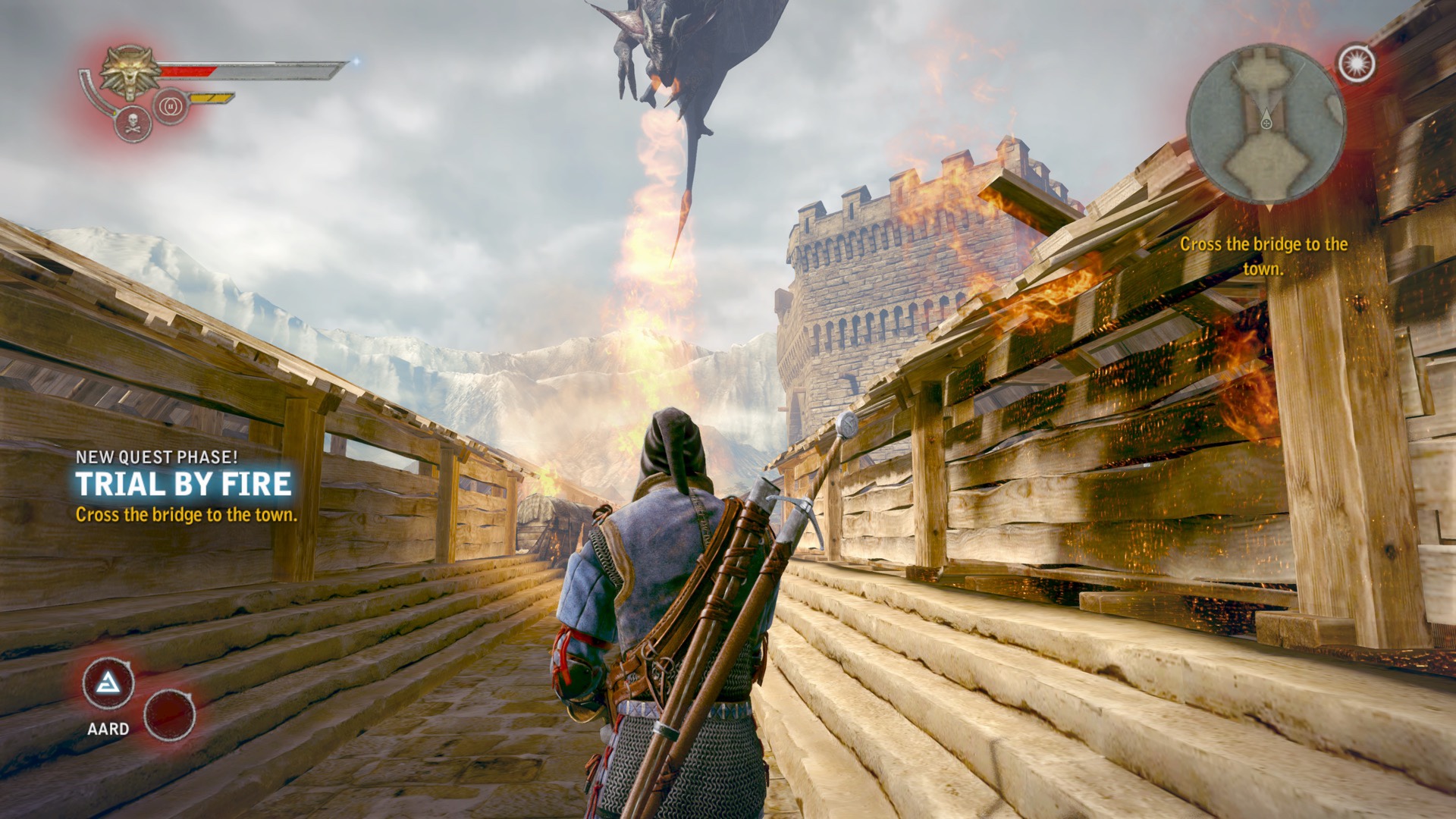
I’ve recently finished the Prologue to The Witcher 2: Assassins of Kings, and it is an absolute banger. It places you front and centre of a battle with Foltest, as he seeks to reclaim his (illegitimate) children from a baroness named Maria Louisa La Valette, and in what culminates in a great little ‘taster’ to the world of the Witcher, you end up in the sewers, fighting soldiers and knights, and by the end of the level you are helping Foltest to escape a dragon.

Perfection.

Despite the fact that the game is just all-around solid, what pleases me the most is how similar it is to The Witcher 3.

I absolutely have the aspiration to crack on with W2 … but by God, I know the level of commitment it took to clear W3, so there is a little demon on my shoulder reminding me of that each and every time I hover my controller over the game.

It wouldn’t be the first time I’ve added another title to the pile of shame.